
How to Spot a Flood-Damaged or Accident-Repaired Vehicle
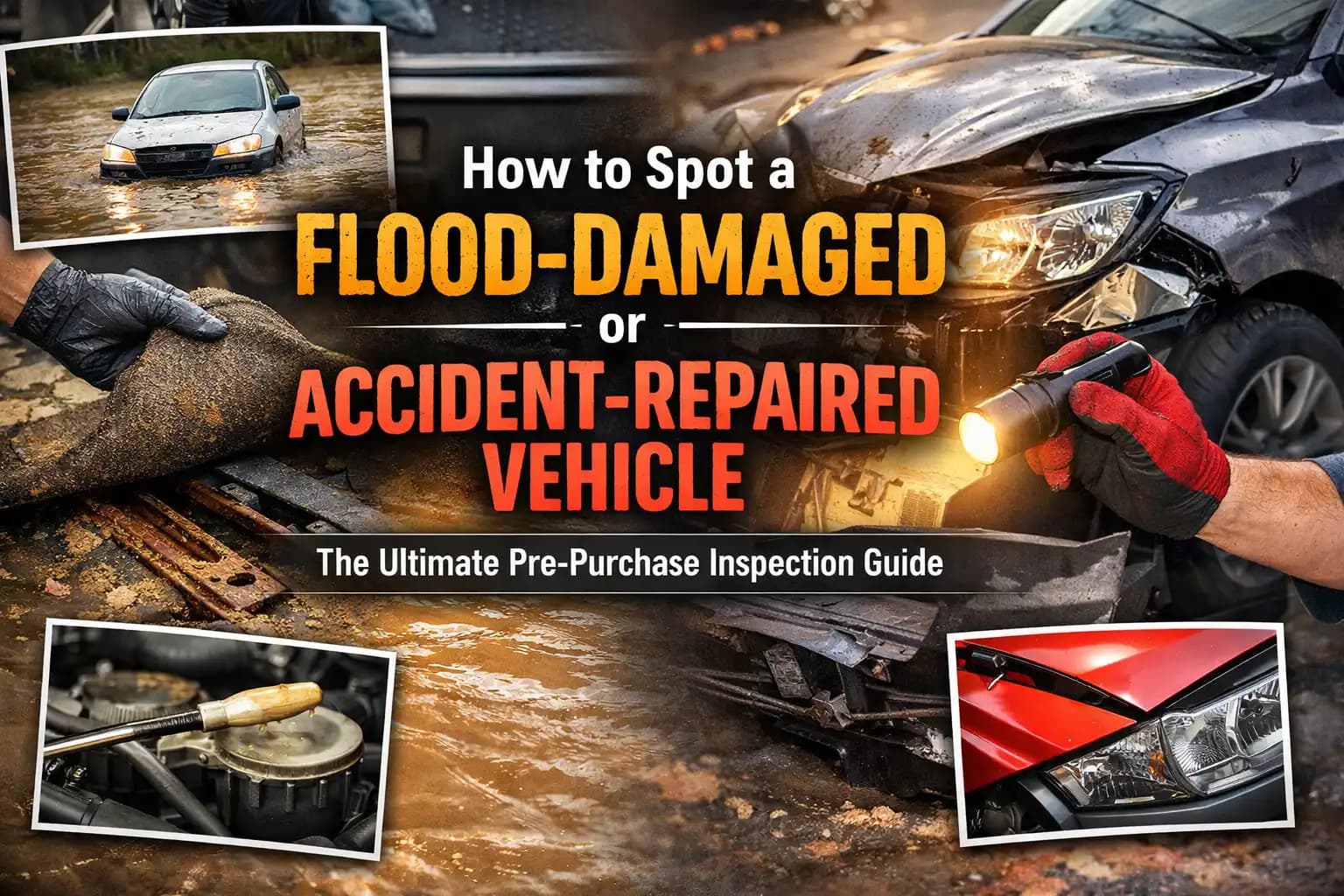
Buying a used car can save you a lot of money but only if you avoid vehicles with hidden problems. Two of the most dangerous and expensive risks in the used car market are flood-damaged vehicles and poorly repaired accident cars. These vehicles may look perfect on the surface, but underneath, they can hide serious mechanical, electrical, and safety issues.
This ultimate pre-purchase inspection guide will help you identify warning signs early, protect your investment, and avoid costly mistakes before buying a used car.
Why Flood-Damaged and Accident-Repaired Cars Are Risky
Vehicles affected by floods or major accidents often suffer from:
- Long-term electrical failures
- Rusted structural components
- Compromised crash safety
- Reduced resale value
- Expensive and recurring repairs
Many sellers clean and cosmetically repair these cars to hide their past. That’s why knowing what to inspect and where to look matters more than ever.
Part 1: How to Identify a Flood-Damaged Vehicle
Flood-damaged cars (also called water-damaged or salvage vehicles) are among the most difficult to fix properly. Water can permanently damage wiring, control modules, sensors, and interior materials.
1. Use Your Senses: Smell and Sight
🚩 Musty or Moldy Smell
A strong damp, moldy, or musty odor inside the cabin is one of the biggest red flags. Even professional cleaning rarely removes it completely. Be cautious if the car smells heavily of air fresheners it may be masking water damage.
🚩 Silt, Sand, or Mud Residue
Check hidden areas such as:
- Under seats and seat rails
- Inside the glove box
- Dashboard edges
- Door pockets and spare wheel well
Fine mud or silt in these areas often indicates past flooding.
🚩 Seatbelt Water Line Test
Pull the seatbelt fully out. If you notice discoloration, dirt marks, or a clear water line at the end of the belt, the vehicle was likely submerged.
2. Mechanical & Electrical Signs of Flood Damage
Flood damage doesn’t always fail immediately it gets worse over time.
| Area | What to Check | Flood Damage Signs |
|---|---|---|
| Seat Rails & Bolts | Look under seats | Rusted rails or bolts (they rust fast when submerged) |
| Carpets & Floor | Lift carpets and trunk liner | Dampness, rust, or new carpet in an old car |
| Engine Bay | Air filter box & wiring | Mud inside air box, corroded connectors |
| Engine Oil & Gear Oil | Dipstick inspection | Milky or cloudy fluid (water contamination) |
| Electronics | Test everything | Flickering lights, faulty windows, random warning lights |
⚠️ Modern cars are especially vulnerable one damaged control module can cause multiple system failures later.
Part 2: How to Spot an Accident-Repaired Vehicle
Not all accident cars are bad but poor-quality repairs can make a car unsafe. Structural damage affects handling, alignment, and crash protection.
1. Bodywork and Paint Inspection
🚩 Uneven Panel Gaps
Factory cars have consistent gaps between doors, hood, fenders, and trunk. Uneven or misaligned gaps suggest body repairs or frame damage.
🚩 Paint Mismatch & Overspray
Inspect the car in daylight and look for:
- Slight color differences between panels
- Paint overspray on rubber seals or glass
- “Orange peel” texture (common in non-factory paint jobs)
🚩 Bolt & Hardware Marks
Open the hood and trunk. If bolt heads show scratches, chipped paint, or tool marks, panels were removed or adjusted often due to accident repairs.
2. Structural & Undercarriage Warning Signs
| Area | What to Inspect | Accident Repair Red Flags |
|---|---|---|
| Frame / Chassis | Frame rails & crumple zones | Kinks, ripples, welding marks |
| Undercarriage | Underbody coating | Fresh undercoat hiding damage |
| Suspension & Tires | Tire wear & steering | Uneven wear, pulling to one side |
| Glass | Window logos & date codes | One window replaced → possible side impact |
⚠️ Frame damage is difficult to fix correctly and directly impacts crash safety.
The Most Important Step: Get a Professional Pre-Purchase Inspection (PPI)
Even experienced buyers can miss hidden damage. Before finalizing any used car purchase, always get a Pre-Purchase Inspection (PPI) from an independent mechanic.
A professional PPI includes:
- Full under-lift inspection of frame and suspension
- Diagnostic scan for hidden or deleted error codes
- Engine, gearbox, and brake assessment
- Vehicle history check (salvage, flood, rebuilt titles)
💡 This small upfront cost can save you massive repair bills later.
Final Thoughts: Buy Smart, Not Sorry
Flood-damaged and accident-repaired vehicles can look tempting due to lower prices but the risks are real. By combining:
- A detailed personal inspection
- Awareness of key red flags
- A professional mechanical inspection
You dramatically reduce your chances of buying a problem car.
When it comes to used cars, what you don’t see can cost you the most.
Written by
Wheeldeal member
Automotive Enthusiast & Content Creator at WheelDeal.