
How to Verify Vehicle Documents in Sri Lanka
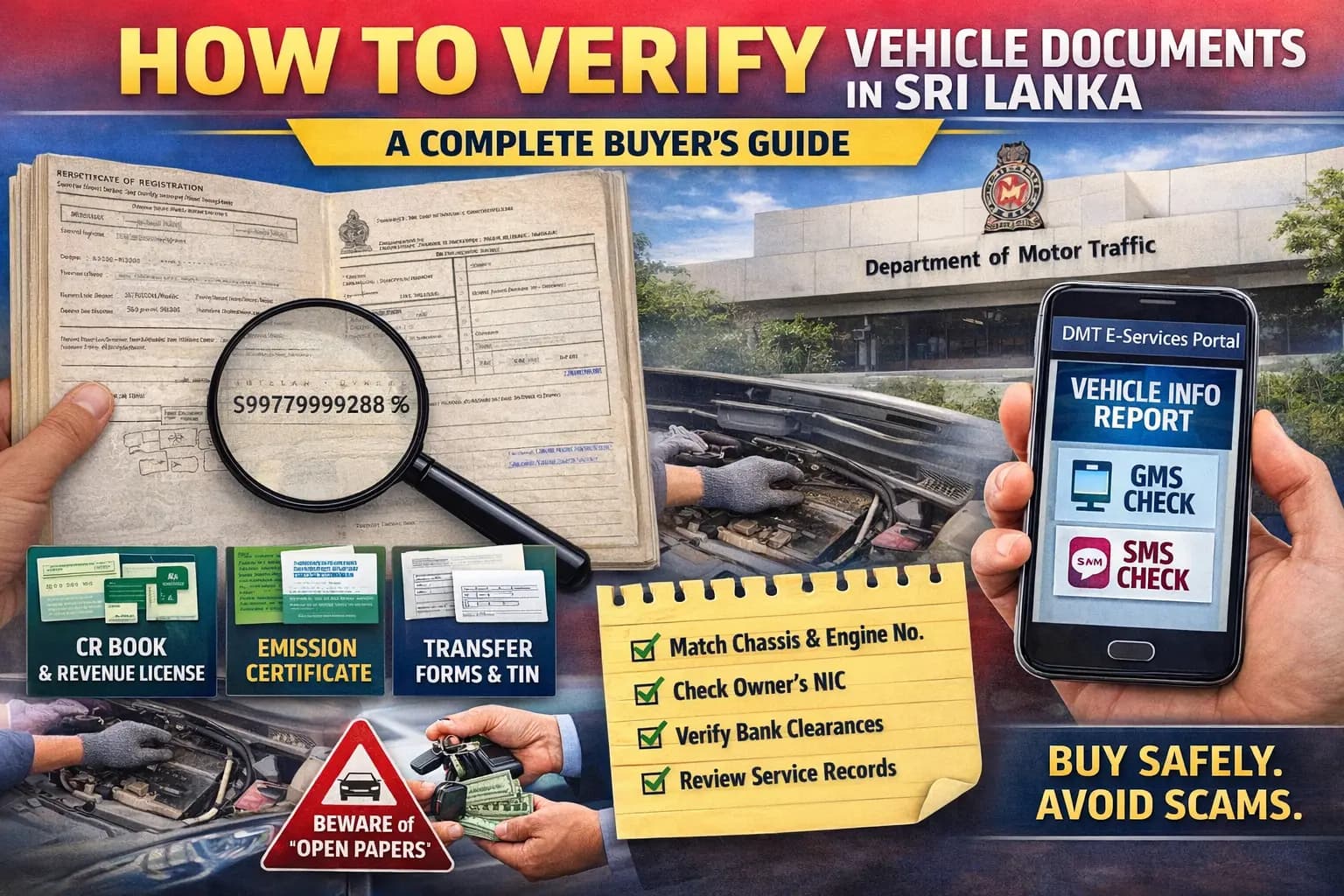
Buying a vehicle in Sri Lanka is a big milestone whether it’s your first car, an upgrade, or a long-term investment. But while most buyers focus on mileage, condition, and price, the real deal-breaker is document verification.
The Sri Lankan used vehicle market has its fair share of risks: forged CR books, unpaid leases, open papers, and even cloned vehicles. One small mistake can turn your dream purchase into a long legal headache.
This guide breaks down how to verify vehicle documents in Sri Lanka, using official Department of Motor Traffic (DMT) procedures and real-world lessons shared by experienced buyers and the Sri Lankan Reddit community.
Essential Vehicle Documents You Must Check
Before paying even a booking advance, make sure the seller provides original documents, not photocopies.
1. Certificate of Registration (CR Book)
The CR Book is the vehicle’s identity card. It proves legal ownership and contains key technical details.
What to check carefully:
- Chassis number
- Engine number
- Registered owner’s name
- Signs of tampering (erased ink, overwritten letters, mismatched fonts)
If anything looks altered or suspicious, walk away immediately.
2. Revenue License
This confirms that the annual road tax is paid.
- Ensure it is valid and not expired
- Cross-check details with the vehicle number
3. Emission Test Certificate
Required to renew the revenue license.
- Review pass/fail history
- Frequent failures may indicate poor maintenance
4. MTA 6 & MTA 8 Forms
These are official vehicle ownership transfer forms.
- Must be signed by the registered owner shown in the CR Book
- Avoid pre-signed or partially filled forms
5. TIN Certificate (Mandatory)
Sri Lanka now requires a Taxpayer Identification Number (TIN) for both buyer and seller during transfers.
Use DMT Online Services to Verify Vehicle Details
Never rely only on what the seller tells you. The Department of Motor Traffic offers digital verification tools that can save you from scams.
DMT E-Services Vehicle Information Report
You can request:
- Full Vehicle Information Report (LKR 150)
- Owner’s name & address
- Engine & chassis numbers
- Mortgage / lease details
- Limited Vehicle Information (Free)
- Basic technical specifications
This is one of the best ways to detect cloned vehicles or hidden bank leases.
Revenue License SMS Check
For a quick check on the spot:
Send: DMT RLS <Vehicle Number>
To: 1919
You’ll instantly receive the vehicle’s revenue license status.
Customs Verification (Imported Vehicles)
For recently imported vehicles, use the Sri Lanka Customs Verification Portal to confirm that all import duties were paid properly. This protects you from future seizures.
Beware of the “Open Papers” Trap 🚨
One of the biggest red flags in the Sri Lankan vehicle market is Open Ownership (commonly called Open Papers).
This happens when a vehicle is sold without officially transferring ownership at the DMT usually to avoid taxes or keep the owner count low.
💬 What buyers on Reddit and legal experts warn:
Open papers are common but illegal. If the registered owner dies or disputes the sale, you have zero legal ownership. The vehicle can be seized anytime.
Why You Should Avoid Open Papers
- Transfer must be completed within 14 days or fines apply
- Vehicle legally belongs to someone else
- Risk of seizure due to owner’s debts or legal cases
Best practice:
Always complete the transfer at the DMT. The One-Day Service at Werahera (around LKR 4,500) is highly recommended for peace of mind.
Step-by-Step Vehicle Document Verification Process
Follow this checklist before finalizing any deal:
Step 1: Physically Match Numbers
- Locate the chassis and engine numbers on the vehicle
- Match them character-by-character with the CR Book
- Uneven stamping or grinding marks red flag
Step 2: Verify Seller Identity
- Ask for the seller’s NIC
- Name and NIC must match the registered owner in the CR Book
- If not, you’re dealing with a broker or open paper situation
Step 3: Check for Bank Leases
- Look under Absolute Ownership in the CR
- If a bank or leasing company is listed, request a Deletion Letter
Step 4: Review Service & Emission History
- Consistent service records indicate a well-maintained vehicle
- Mileage should align with service and emission reports
Pro Tips for Smart Vehicle Buyers in Sri Lanka
- Be cautious with “Car Sales” yards many vehicles are cosmetically repaired to hide damage
- Prefer direct owners who have used the vehicle long-term
- Use an OBD II scanner to detect hidden fault codes
- Double-check spelling, NIC numbers, and engine details at the DMT counter before leaving
- Fixing document errors later can take months
Final Thoughts
When millions of rupees are involved, there is no such thing as being too careful. Combining official DMT verification, digital tools, and real-world buyer experience is the safest way to buy a vehicle in Sri Lanka.
Do the checks properly, avoid shortcuts like open papers, and insist on legal transfers your future self will thank you.
Written by
Wheeldeal member
Automotive Enthusiast & Content Creator at WheelDeal.